
Licensed electrical workmanship
Solar is an electrical generation system connected to your home. We treat it like one: proper conductor sizing, terminations, overcurrent protection, and verification before commissioning.
Serving Thunder Bay, Ontario & surrounding areas
Mon–Fri 8am–6pm · Sat 9am–2pm
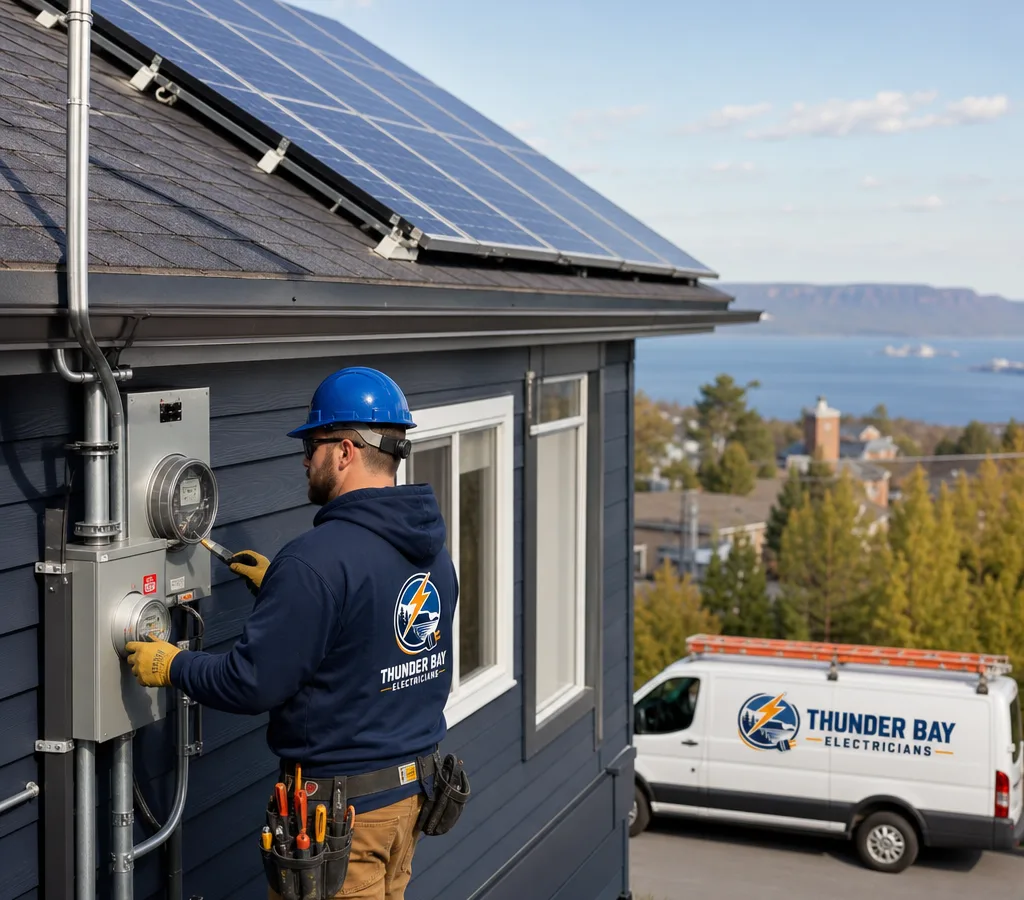
Get a clean, code-compliant solar setup that ties into your home safely. Thunder Bay Electricians handles the electrical side of solar installs, upgrades, and troubleshooting so your system is built to run reliably in Northwestern Ontario conditions.
If you are searching for solar panel Thunder Bay help, you are usually trying to answer two questions: “Will solar work for my home?” and “Who can connect it safely?” The panels are only part of the project. The electrical design and installation decide how dependable your system is, how cleanly it integrates with your existing service, and how smoothly the inspection and utility approval go.
Thunder Bay Electricians focuses on the electrical scope around solar: service and panel capacity checks, new breakers and feeders, code-compliant disconnects, inverter and battery wiring, grounding and bonding, labeling, and the final tie-in so your home is protected. If you are starting from scratch or upgrading an older setup, we lay out a clear plan before anything is energized.
For general electrical work beyond solar, many homeowners start by talking with a Thunder Bay electrician to confirm their service capacity and any panel limitations before choosing equipment.
A residential solar project has a few consistent electrical building blocks, even when the roof layout and equipment brands vary.
Service capacity and panel space: We verify your main panel has room and capacity for a solar backfeed breaker or a supply-side connection, depending on what fits the service equipment and current code requirements.
Inverter connection and rapid shutdown: Modern systems typically use string inverters with optimizers or microinverters. We wire the AC and control circuits and confirm the shutdown setup is correct for rooftop safety.
AC/DC disconnects and labeling: Proper disconnecting means clear isolation points for emergency services and maintenance. Labels matter because inspectors and utility crews rely on them.
Grounding, bonding, surge protection: We bond metallic systems correctly and address surge risk. In Thunder Bay, seasonal storms and long feeder runs can make surge protection a smart discussion.
Monitoring and commissioning: After electrical checks, we confirm the inverter powers up, protections are set correctly, and monitoring is communicating so you can track performance and spot faults early.
If you already have panels and something is not right—nuisance trips, inverter faults, or monitoring offline—we can troubleshoot the wiring and protection devices to get you back to stable operation.
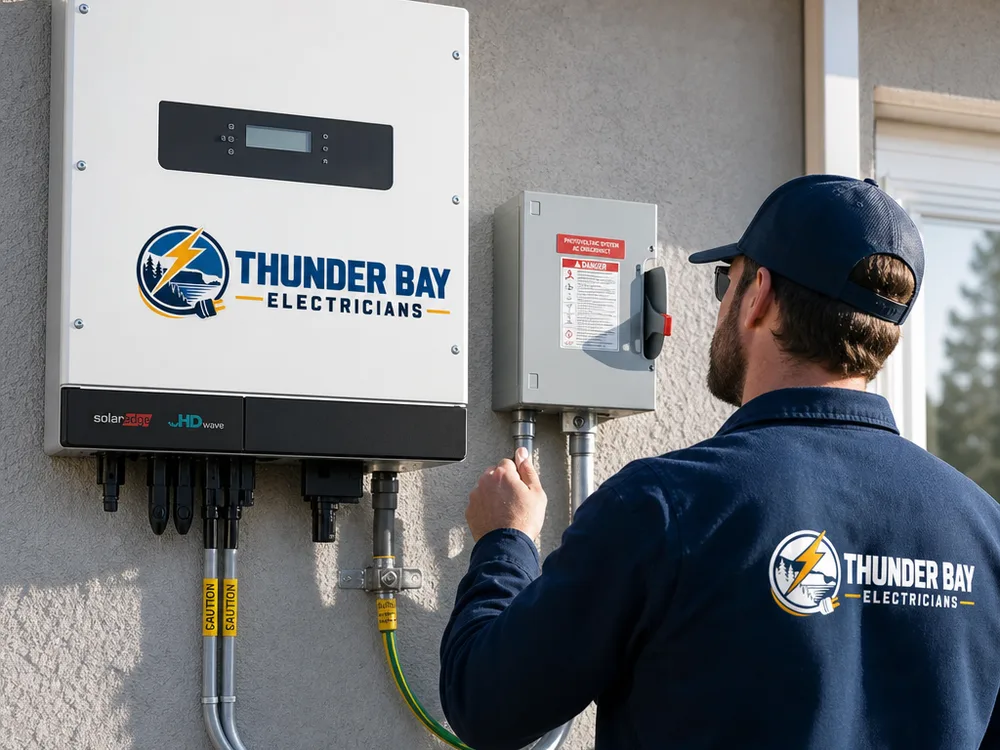
Solar is an electrical generation system connected to your home. We treat it like one: proper conductor sizing, terminations, overcurrent protection, and verification before commissioning.
Grid-tied solar involves coordination for inspection and utility requirements. We keep the electrical scope organized so documentation and labeling do not become last-minute issues.
Older panels and mixed renovations are common. We plan routing, penetrations, and equipment placement to minimize disruption while keeping the install serviceable.
If your system is adding storage, adding a generator interlock, or you are expanding array size, we can evaluate the existing tie-in and update protection and wiring to match the new design.
We help you think through where disconnects, inverters, and batteries should live so they stay accessible, protected, and easy to maintain.
Thunder Bay homes see wide seasonal swings. That changes how we approach routing, mounting interfaces, and equipment placement, especially for electronics.
Cold weather and snow load: Your racking and roof interface must be installed to the manufacturer instructions, and electrical penetrations need durable sealing. We pay attention to where conduit runs and junction points sit so melt, ice, and freeze-thaw cycles do not stress fittings.
Wind exposure near the lake: If your home is in exposed areas closer to the Lake Superior waterfront, tidy cable management and secure conduit support are more than aesthetics. Movement over time causes wear, and solar wiring needs to be protected from abrasion.
Older neighbourhood housing stock: In areas like Port Arthur and Fort William, it is common to find older electrical services or limited panel space. Before any solar tie-in, we check whether your service equipment can accept the connection method proposed and whether a panel upgrade or subpanel is the safest path.
Detached garages and long runs: Properties in places like Current River or Westfort sometimes place the best roof surface on a detached structure. That can mean longer feeder runs and careful voltage-drop planning, plus grounding and bonding details that have to be correct.
The goal is simple: the solar equipment should work as intended, and the electrical installation should be easy to inspect, easy to service, and safe for your family.
We look at the main service, available breaker space, grounding, and where equipment can be placed. If you already have a solar design, we verify the electrical tie-in details make sense for your home.
You get a clear scope for the electrical work: disconnects, feeders, breaker changes, equipment mounting locations, and what needs to happen before inspection and utility approval.
We install the required wiring, protections, and disconnecting means, then complete the inverter or combiner connections and any monitoring or communication wiring.
We test circuits and protections, apply the required labels, and confirm the system powers up correctly. If issues appear during commissioning, we troubleshoot and correct the electrical cause.
For the electrical portion of a typical residential solar install in Thunder Bay, costs often range from about $1,500 to $6,000+, depending on system size, wiring distance, and whether service equipment needs changes. A straightforward inverter tie-in with new breakers and disconnecting can sit at the lower end, while longer runs, exterior equipment mounting, or a main panel/service upgrade increases the total.
Your final price depends on service capacity, existing panel condition, roof-to-panel routing complexity, trenching or detached-structure feeders, surge protection choices, and any battery or backup integration. The exact scope and cost are confirmed after an on-site assessment of your service and layout.
“We had panels installed but the inverter kept faulting and the breaker would trip randomly. They traced it to a wiring and protection issue at the tie-in, fixed the labeling and disconnect setup, and everything has been stable since.”
Aidan R.
“Our older panel didn't have room for the solar connection. They explained the options plainly, added the right equipment, and kept the work clean and easy to inspect.”
Melissa K.
Yes. We can take on the electrical scope only, including inverter connection, breakers, disconnects, grounding and bonding, labeling, and commissioning checks, as long as the overall design and equipment meet applicable requirements.
Sometimes. If your panel is full, undersized for the proposed backfeed, or the service equipment is older and not suitable for the connection method, an upgrade or subpanel may be the safest route. We confirm options after checking your service rating, available breaker space, and the proposed inverter output.
Many electrical tie-ins can be completed in 1 day, but timelines vary with equipment placement, wiring distance, and whether your home needs a panel or service change. We provide a realistic schedule after the site review.
Often, yes, but it depends on the inverter type and how the system was originally wired. Adding storage can require new transfer equipment, critical-loads wiring decisions, and updated protections; we assess compatibility first and then scope the changes.
We commonly see nuisance breaker trips, inverter faults caused by wiring or configuration issues, damaged exterior conduit or fittings, poor labeling/disconnect placement, and grounding/bonding gaps. The fix starts with verifying terminations, protection sizing, and the exact equipment configuration on site.
Tell us what you are installing (or what is not working) and we will confirm your service capacity, the right tie-in approach, and a clear electrical scope that is ready for inspection and utility coordination.