
Transfer switches and interlocks
We install transfer switches for standby systems and interlock kits where permitted for portable generator connections, so the generator cannot energize the utility service.
Serving Thunder Bay, Ontario & surrounding areas
Mon–Fri 8am–6pm · Sat 9am–2pm
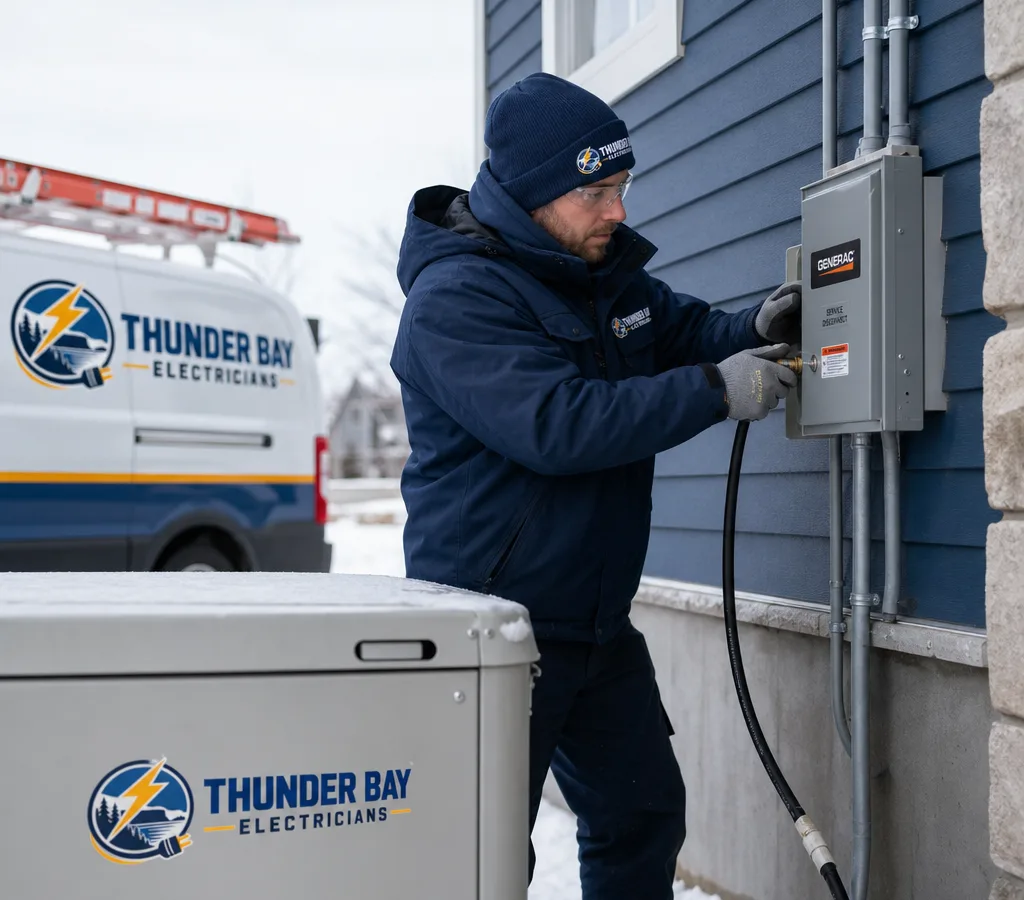
Keep the lights, heat, and critical equipment running when the grid is down. Thunder Bay Electricians installs, connects, tests, and services standby and portable generator setups for homes and businesses across Thunder Bay.
If you're searching for generators Thunder Bay, you're usually looking for one thing: dependable backup power without risking your home, your equipment, or the people working on it.
We help you choose the right generator setup, then we handle the electrical work that makes it safe and usable. That includes proper connection methods (transfer equipment), load planning, grounding and bonding checks, labeling, and startup testing.
Backup power work is not a DIY wiring project. A generator connected incorrectly can backfeed the utility lines, damage appliances, create fire risk, or energize circuits you didn't intend to power. Our job is to make sure your generator system powers what it should, shuts off what it must, and performs the same way every time you start it.
As your Thunder Bay electrician, we coordinate the details that matter: where the generator will sit, what circuits are essential, and how to connect it so switching between utility and generator power is controlled and predictable.
We install transfer switches for standby systems and interlock kits where permitted for portable generator connections, so the generator cannot energize the utility service.
We map what you want to run during an outage—heat equipment, sump, fridge or freezer, well pump, selected lighting, and business-critical loads—and size the connection and circuits accordingly.
We add outdoor generator inlets, properly rated wiring, and labeled circuits so setup is straightforward during a storm or overnight outage.
If your generator system isn't taking load, trips, won't transfer, or has intermittent power, we isolate whether the issue is the generator, transfer equipment, breakers, wiring, or controls.
We verify correct switching, confirm selected circuits energize as expected, and check for neutral and ground problems, incorrect breaker sizes, or overloaded essential-load panels.
You get a practical walkthrough for starting, switching, and shutting down, plus labeling so anyone on-site can operate the system safely.
The best choice depends on how often you lose power, what you need to run, and how hands-off you want the system to be.
Standby generators are permanently installed, typically paired with an automatic transfer switch (ATS). When utility power drops, the ATS isolates the building from the grid and supplies power from the generator. This is the most convenient option for homes with critical heating equipment or businesses that need continuity.
Portable generators cost less up front, but they still need a safe connection method. A properly installed generator inlet with an interlock or manual transfer equipment prevents backfeed and keeps switching controlled. Extension cords through windows are common, but they are rarely the safest or most practical long-term plan.
In Thunder Bay, winter outages can create urgent heat and water concerns. We build a plan around your essential loads first, then expand if the budget and generator capacity allow.
If you already own a generator, we can often design the connection around what you have, provided the unit's output and receptacles are compatible with a safe inlet and transfer method.
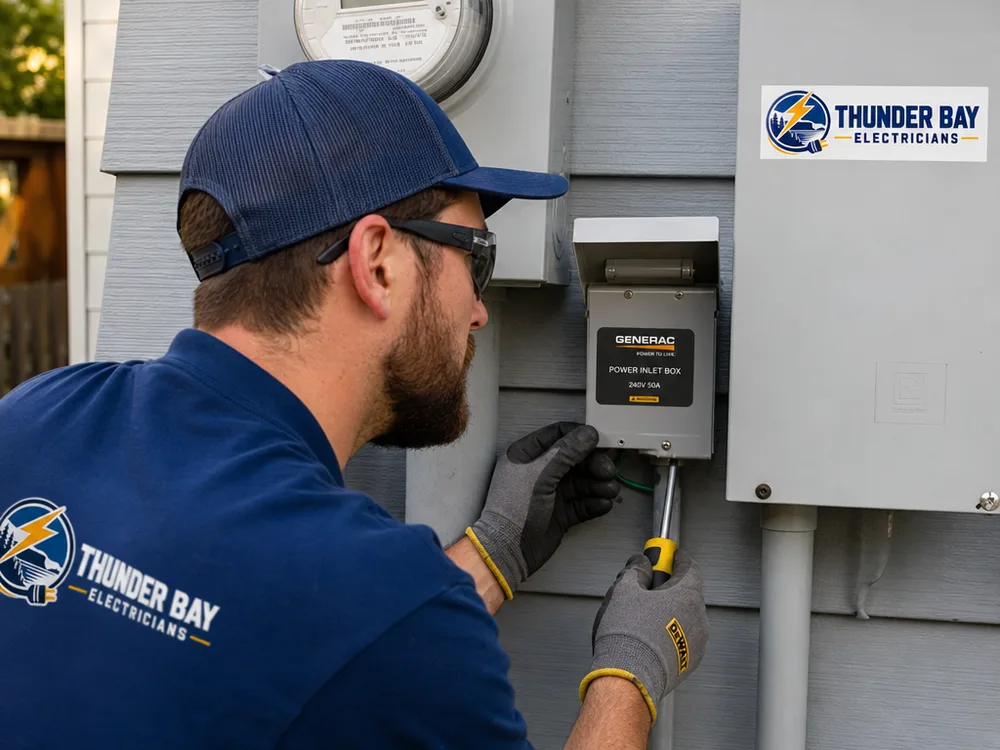
We review what you want powered, where the generator will be located, and how power will be transferred. We also check your service panel layout and available breaker space.
We identify essential circuits and choose the safest connection method—ATS, manual transfer switch, essential-load panel, or inlet with interlock where appropriate.
We install transfer equipment, inlets, wiring, breakers, and labeling. We verify grounding and bonding details that affect safe generator operation.
We test transfer operation and confirm the selected circuits start and run properly. If a motor load needs a different start strategy or circuit choice, we adjust the plan.
You get simple instructions for switching, startup and shutdown, and what to do if something doesn't behave normally during an outage.
Most generator installation work in Thunder Bay typically ranges from about $900 to $3,500+ for a portable-generator inlet and transfer method, while standby generator electrical hookups and automatic transfer equipment often land around $3,500 to $9,500+ depending on amperage, distance, and load management.
Your final price depends on panel type and capacity, whether an essential-load subpanel is needed, wire and conduit run length, exterior wall access, service upgrades required for the transfer equipment, and any troubleshooting or corrections to existing wiring. Exact costs are confirmed after an on-site assessment of your panel, layout, and essential loads.
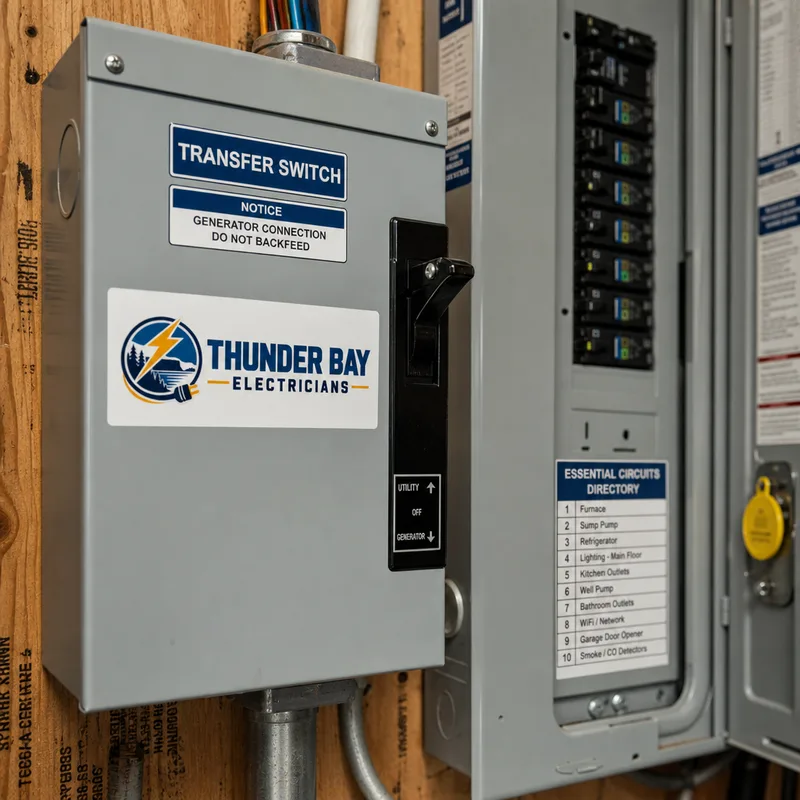
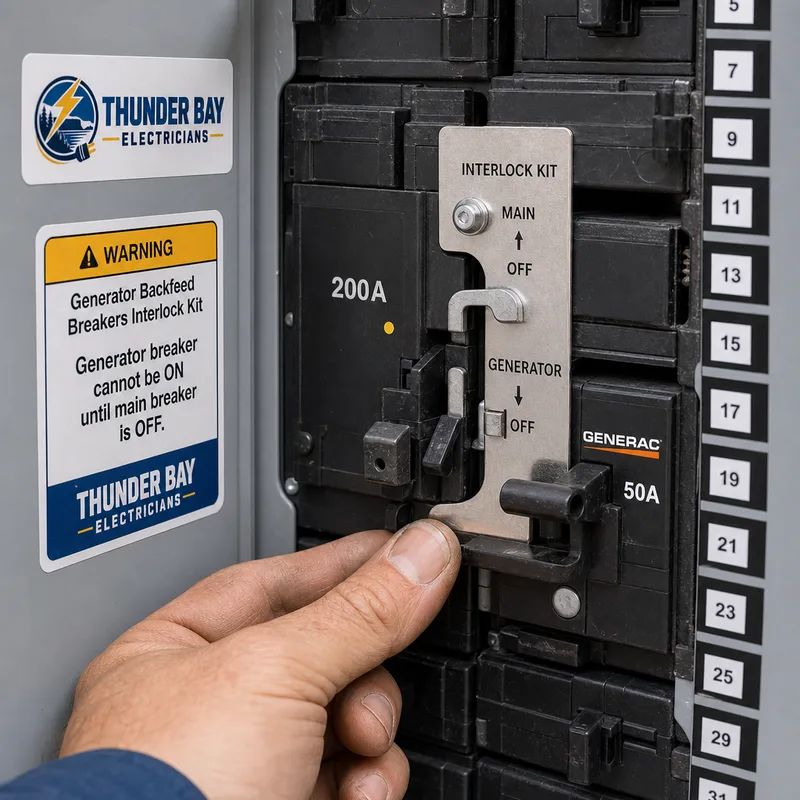
A generator should only be connected through approved transfer equipment such as a transfer switch or a properly installed interlock and inlet setup, because it must prevent backfeed into utility lines. We'll confirm the safest method for your panel and the generator you're using, then label the system so operation is clear during an outage.
If you want the generator to start and switch over without anyone on-site, you need an ATS paired to the standby unit. If you're comfortable switching manually and your system design allows it, a manual transfer method can work, but it changes how quickly you can restore power and what loads can be supported.
The right size depends on what you want to run at the same time, especially motor loads like furnaces, sump pumps, and well pumps that can have higher starting demand. We plan around essential circuits first and avoid guesswork by mapping your loads to a transfer plan that matches the generator's output.
Yes. In many cases we can add a weatherproof generator inlet, an interlock or transfer switch (as appropriate), and a clear circuit plan so you can power selected loads without running cords through doors or windows. We'll also confirm the inlet and wiring are correctly rated for your generator's output connection.
That usually comes down to load sizing, starting current from motors, or how the circuits were selected for backup. We troubleshoot by checking which loads are on the backup side, verifying breaker sizing and wiring, and confirming the generator output and voltage stay stable under start-up conditions.
Many portable generator inlet and transfer setups can be completed in a single visit once the plan is set, while standby generator electrical connections and transfer equipment may take longer depending on wiring runs, panel changes, and commissioning. After a site assessment, we can give you a clear schedule and what needs to be ready before work starts.
If you want backup power you can trust, start with a load plan and a safe transfer method.
Book Your Free InspectionShare a few details about your property in Thunder Bay and what you want powered during an outage. We'll confirm the right transfer equipment, walk you through options for standby or portable systems, and provide a clear scope before any work begins.